Call: (920) 497-9996 Book Consultation
Clinical Skin Resurfacing

Chemical Peels in Ashwaubenon: The Clinical Guide to Skin Resurfacing

Radiant, healthy skin resurfacing outcome following clinical chemical peel protocol at Hotchandani Laser
Clinical skin resurfacing and cellular turnover outcome · Hotchandani Laser, Veins & Aesthetics Green Bay
Quick Clinical Verdict

At our Green Bay clinic serving Ashwaubenon, chemical peel selection depends entirely on clinical target depth: superficial AHA/glycolic peels exfoliate the 0.05 mm epidermal layer with zero downtime, while medium-depth TCA (20%–35%) peels reach 0.45 mm into the papillary dermis to clear stubborn sun pigmentation and fine lines within 3 to 7 days of visible shedding. In Northeast Wisconsin, optimal peel candidates schedule treatments between October and March to regenerate fresh collagen across a 28-day cellular cycle without summer UV interference.

How Do Chemical Peels Work at the Cellular Level?

A chemical peel is a controlled chemoexfoliation process engineered to dissolve intra-cellular bonds (desmosomes) holding hyperkeratinized, photodamaged cells to the skin’s surface. When applied under clinical supervision by Gope Hotchandani, MD or aesthetic nurse practitioner Denise Bianco, FNP-C, an exact acid formulation induces targeted coagulative necrosis of diseased epidermal and dermal tissue.

Once non-viable cells shed, the body activates a cascade of wound-healing cytokines. This stimulates basement-membrane basal cells to accelerate the standard 28-day cellular turnover cycle while triggering dermal fibroblasts to synthesize new type-I and type-III collagen, restoring natural elastic recoil and skin luminosity.

Superficial vs. Medium vs. Deep Peels: Clinical Comparison

Chemical peel solutions are categorized by histological penetration depth. Understanding the difference between gentle enzyme exfoliators and physician-level trichloroacetic acid (TCA) protocols is essential before selecting a treatment plan:

Peel Classification Active Acid Agents Target Histology Flaking & Downtime Clinical Indication
Superficial
"Lunchtime Peel"
Glycolic (20%–50%), Salicylic (20%–30%), Lactic, or Mandelic Acid Stratum corneum to stratum spinosum (0.05 mm depth) 0 to 2 days mild dryness; no social downtime Dull texture, mild acne congestion, pre-event glow, initial barrier conditioning
Medium-Depth
Physician Protocol
Trichloroacetic Acid (TCA 20%–35%) or Jessner’s + TCA Combination Full epidermis through papillary dermis (0.45 mm depth) 3 to 7 days of visible shedding, light crusting, and pinkness Actinic sun damage, stubborn melasma, post-acne pigmentation, perioral fine lines
Deep Peel
Surgical Level
Phenol-Croton Oil formulas or high-concentration TCA (>40%) Mid-reticular dermis (0.6 mm to 0.8 mm depth) 10 to 14 days full epithelialization; persistent erythema for weeks Severe photoaging, deep rhytids, cross-hatched sun damage; often replaced by laser resurfacing

Why Northeast Wisconsin Skin Demands Seasonal Peel Planning

Living in Green Bay and Ashwaubenon exposes skin to severe environmental swings. Between December and March, sub-zero outdoor temperatures combined with forced indoor furnace heating slash relative indoor humidity below 20%. This compromises the stratum corneum’s intercellular lipid matrix, causing barrier flaking and chronic micro-inflammation.

Conversely, summer recreation along the Fox River and Green Bay waters reflects high UV doses onto the face, accelerating photo-melanogenesis and solar lentigines (age spots). Because freshly peeled skin is exquisitely photolabile, our clinical team at Hotchandani Laser, Veins & Aesthetics recommends scheduling medium-depth peels from mid-autumn through early spring, when the regional UV index drops below 3. This window allows the dermal matrix to rebuild without risk of post-inflammatory hyperpigmentation (PIH).

How Our Clinic Customizes Resurfacing for Ashwaubenon Patients

Commercial day spas frequently apply generic, one-size-fits-all peel concentrations. At our medical facility on Ramada Way (less than five minutes from the Ashwaubenon border), every treatment starts with a clinical skin barrier diagnostic:

  • Fitzpatrick Tone Profiling: We carefully evaluate baseline melanin levels (Fitzpatrick Types I through VI). Higher melanin complexions require pre-treatment priming with tyrosinase inhibitors (such as tranexamic acid, azelaic acid, or hydroquinone) for 2 to 4 weeks to prevent post-peel discoloration.
  • Acid Synergy Selection: Patients struggling with adult hormonal breakouts receive lipophilic beta-hydroxy acid (salicylic), which penetrates sebum-clogged pores. For patients targeting brown spots or cross-hatched sun spots, we formulate physician-strength TCA combinations.
  • Complementary Modality Sequencing: For patients seeking total facial rejuvenation, chemical peels are strategically paired with Botox Cosmetic to relax hyperdynamic lines, or followed weeks later by Morpheus8 radiofrequency microneedling for structural skin tightening.
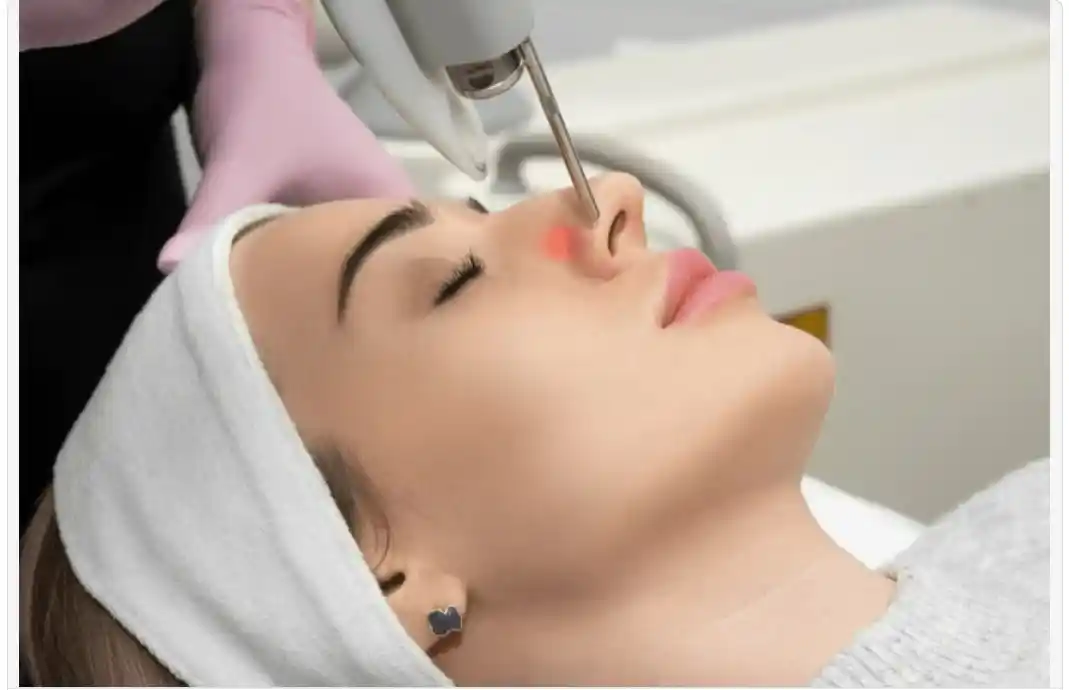
Our In-Clinic Protocol: Precision Depth Control & Barrier Safety

The defining difference between a retail spa facial and a medical-grade chemical peel at Hotchandani Laser, Veins & Aesthetics is active endpoint monitoring. Our clinical team does not leave acid formulas on a fixed timer; instead, we visually monitor epidermal frosting (protein denaturation) under magnification to ensure the peel penetrates precisely to the intended papillary dermal boundary without unintended thermal or chemical spread.

Physician-supervised chemical peel application at Hotchandani Laser in Green Bay near Ashwaubenon
In-Clinic Treatment Observation · Green Bay, WI Targeted 25% Trichloroacetic Acid (TCA) peel applied to an Ashwaubenon patient presenting with persistent actinic solar damage and periorbital fine lines. Following a 3-minute controlled exposure and sodium bicarbonate neutralization, the patient experienced active flaking beginning on Day 3 and full re-epithelialization with improved epidermal clarity by Day 7.

The Hotchandani 14-Day Barrier Priming Mandate

"In 25+ years of aesthetic surgical and laser practice in Northeast Wisconsin, I have observed that peel success is determined before the patient ever lies on our treatment table. Applying high-concentration acids to a barrier stripped by winter central heating invites prolonged erythema and uneven penetration. Every medium-depth peel candidate at our clinic begins a 14-day lipid restoration protocol containing physiological ceramides, broad-spectrum zinc oxide (SPF 40+), and gentle enzymatic prep. This protocol ensures uniform acid uptake and reduces post-peel recovery by nearly 40%."
— Gope Hotchandani, MD, Medical Director

Schedule Your Skin Assessment at Ramada Way

Clinical Science & Peer-Reviewed Standards

The efficacy and biological safety of chemical chemoexfoliation are governed by rigorous dermatologic criteria. According to consensus guidelines from the American Society of Plastic Surgeons (ASPS) and published clinical trials in the Journal of Dermatologic Surgery, peel efficacy depends on three quantifiable chemical parameters:

0.45 mm
Papillary Dermal Target Depth
pH 1.8–2.2
Medical Acid Formulation Level
28 Days
Physiologic Cell Renewal Cycle

Clinical research confirms that solutions buffered above pH 3.0 lose substantial bioavailability, acting purely as superficial surface hydrators rather than stimulating genuine neocollagenesis. By administering unbuffered, medical-strength formulations in a monitored clinical setting, Gope Hotchandani, MD and Denise Bianco achieve therapeutic dermal remodeling while maintaining an outstanding patient safety record.

When a Chemical Peel Is the Wrong Clinical Choice

Honest Physician Counsel

At Hotchandani Laser, Veins & Aesthetics, we regularly advise patients against receiving a chemical peel when an alternative therapy is clinically superior or when active contraindications exist. If your primary aesthetic concern is moderate to severe structural skin laxity, jowling, or submental fullness, chemical peels will disappoint you; they resurface texture and pigment, but cannot tighten deep fascial layers. In those scenarios, Morpheus8 RF microneedling or SmartSkin® CO2 Laser Resurfacing is the medically appropriate recommendation.

Furthermore, we postpone or withhold peels for patients with active herpes simplex (cold sore) outbreaks, those who have completed oral isotretinoin (Accutane) within the past 6 months (which inhibits normal follicular re-epithelialization), or individuals with recent unprotected UV exposure. Practicing honest medicine and saying "not yet" protects your skin from post-inflammatory scarring.

Frequently Asked Questions About Chemical Peels

Downtime directly corresponds to clinical peel depth. For superficial AHA/glycolic peels, there is zero social downtime—patients experience mild skin flushing that subsides within 12 to 24 hours. For medium-depth TCA (20%–35%) peels, skin tightens on Days 1 and 2, followed by active flaking and shedding from Day 3 through Day 6. By Day 7, new re-epithelialized skin is fully revealed with refreshed clarity and tone.

While patients observe radiant brightening after a single treatment, corrective dermatologic results for stubborn hyperpigmentation, sun spots, or fine lines require a cumulative series. We typically recommend a series of 3 to 4 treatments spaced 4 to 6 weeks apart. This protocol coordinates with the body’s natural 28-day cellular turnover window to stimulate progressive collagen rebuilding.

Yes, when administered under experienced physician supervision. In melanin-rich complexions (Fitzpatrick Types IV–VI), aggressive unbuffered acids can trigger post-inflammatory hyperpigmentation. Gope Hotchandani, MD and Denise Bianco, FNP-C utilize specialized larger-molecule acids (such as mandelic and lactic acid) and pre-condition the skin with medical tyrosinase inhibitors for 2 to 4 weeks prior to treatment to ensure safe, even brightening without pigmentation rebound.

Yes, combination therapies frequently yield the most harmonious aesthetic outcomes. Botox Cosmetic can be administered during the same appointment or 2 weeks prior to relax underlying dynamic muscle contraction, allowing the peeling skin to heal smoothly. For dermal volumizers like Juvéderm, we generally schedule injections 10 to 14 days after peel re-epithelialization is complete to maintain strict asepsis.

Ready for Clearer, Renewed Skin?

Schedule your comprehensive skin resurfacing consultation with Gope Hotchandani, MD and Denise Bianco, FNP-C. Our Green Bay medical clinic is located on Ramada Way, less than 5 minutes from Ashwaubenon.

Request Consultation (920) 497-9996

Clinical Treatment Guides & Related Pages

SmartSkin® CO2 Laser Resurfacing Morpheus8 RF Microneedling Botox & Fillers in Ashwaubenon DiamondGlow® Dermalinfusion Before & After Clinical Gallery